



A background check is a snapshot. It tells you who someone was on the day you ran the report. It says nothing about who they become eighteen months after the deal closes, after the loan funds, after the hire starts.
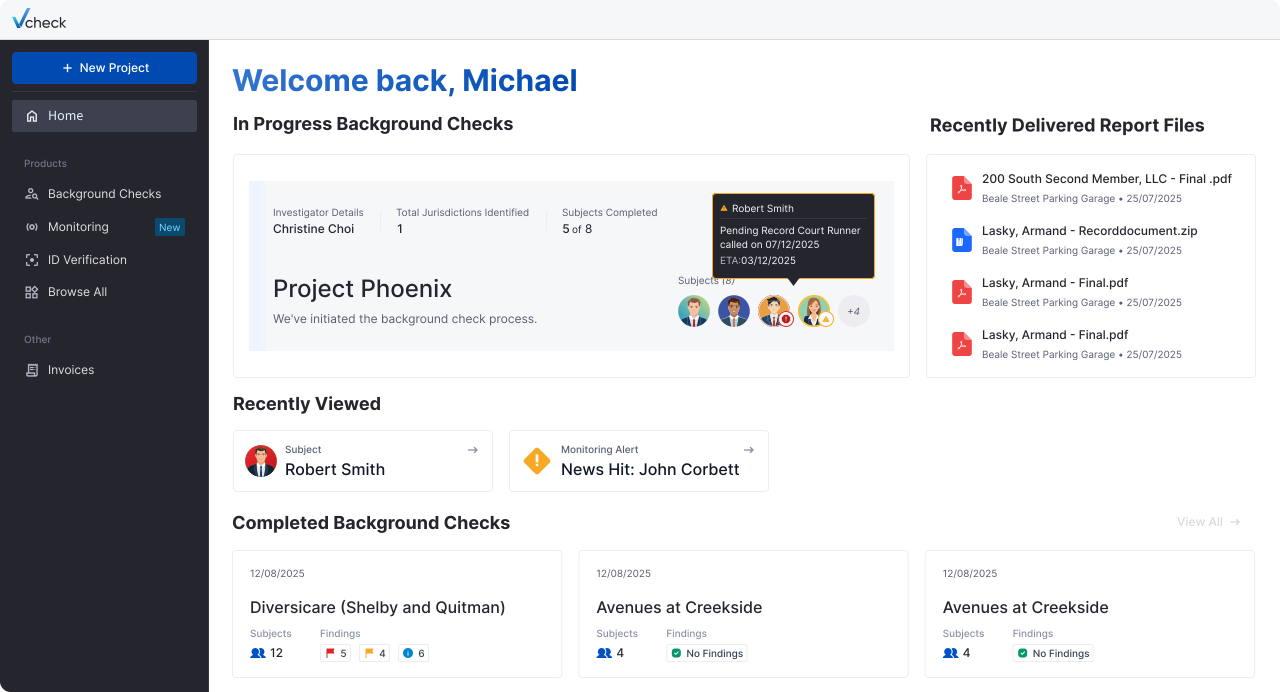
Continuous monitoring is the practice of ongoing, automated monitoring of a person or entity across risk-relevant sources adverse media, sanctions and PEP lists, criminal and civil litigation, bankruptcy filings, and regulatory actions so that new risk surfaces the moment it appears, not at the next scheduled review.
For institutions managing portfolio companies, borrowers, vendors, or ongoing client relationships, this isn’t a nice-to-have. It’s the difference between finding out about a fraud indictment from a compliance alert and finding out from a headline.
Why Point-in-Time Diligence Breaks Down
Risk isn’t static, but most diligence programs treat it that way:
- A clean background check today says nothing about tomorrow. Litigation gets filed, new criminal records emerge, adverse media breaks in real time; none of it waits for your next annual review cycle.
- Manual re-screening doesn’t scale. Re-running checks on a portfolio of 50, 200, or 2,000 subjects on a recurring basis isn’t a policy problem; it’s a headcount problem.
- Regulators increasingly expect it. AML, KYC, and FCPA frameworks are shifting from “screened at onboarding” to “monitored throughout the relationship,” and examiners are asking for evidence of the latter.
How Continuous Monitoring Actually Works
A modern monitoring platform typically runs on four components:
1. Broad, automated source coverage. Real-time scanning across global news media, sanctions and enforcement lists, PEP registries, sex offender registries, and criminal and civil court records including federal filings where court data (e.g., PACER) is integrated directly into the platform.
2. AI-assisted news triage. Duplicate news hits across sources get consolidated into a single alert, with a generated summary surfacing what the source article found, so an analyst reviews one clear signal instead of twelve near-identical headlines.
3. Human Remediation. Our tool reduces false positives by 87% compared to other leading monitoring software, but if clients need additional support they can escalate alerts to trained investigators for deeper human-led analysis or document retrieval.
Who Actually Needs This
- Private equity and venture firms tracking portfolio companies and founders for the life of the hold, not just at the term sheet.
- Banks and lenders monitoring borrowers for the life of the loan, where credit risk and reputational risk move together.
- Law firms that maintain ongoing diligence records on clients and counterparties for conflicts, AML, and engagement risk.
- Corporate compliance teams screening vendors and third parties on a recurring basis under FCPA and sanctions programs.
The Bottom Line
Continuous monitoring does not replace due diligence; it extends it. A background check answers, “Who is this person or entity right now?” Monitoring answers, “Has anything changed?” for as long as the relationship lasts. As regulatory expectations and reputational stakes rise, “we checked once” is no longer a defensible position.
Vcheck’s Continuous Monitoring Platform delivers 24/7 alerts across adverse media, sanctions, PEP, criminal and civil litigation, and bankruptcy records, through a SOC II–compliant portal with configurable risk parameters and human-led escalation. Explore Vcheck’s Continuous Monitoring Platform →
Frequently asked questions
A background check is a point-in-time investigation. Continuous monitoring is an ongoing, automated process that re-screens a subject on a ~24/7 basis and alerts you when new risk-relevant information appears.
Global adverse media, sanctions and enforcement lists, PEP registries, sex offender registries, criminal and civil court filings, and bankruptcy records.
Most commonly funds, endowments, private equity and venture firms, banks and lenders, law firms, and corporate compliance teams anywhere a relationship (investment, loan, client, vendor) continues well past the initial screening.Freq